AI agents for customer support: what to automate, what to keep human
An AI agent can now answer most of the questions your team types out twenty times a day, at 2 a.m., in Marathi, Hindi or English. It can also confidently promise a refund you do not offer. Here is where AI earns its place in small-business support, where it should stop, and the rules that changed this year.
What an AI support agent is, and is not
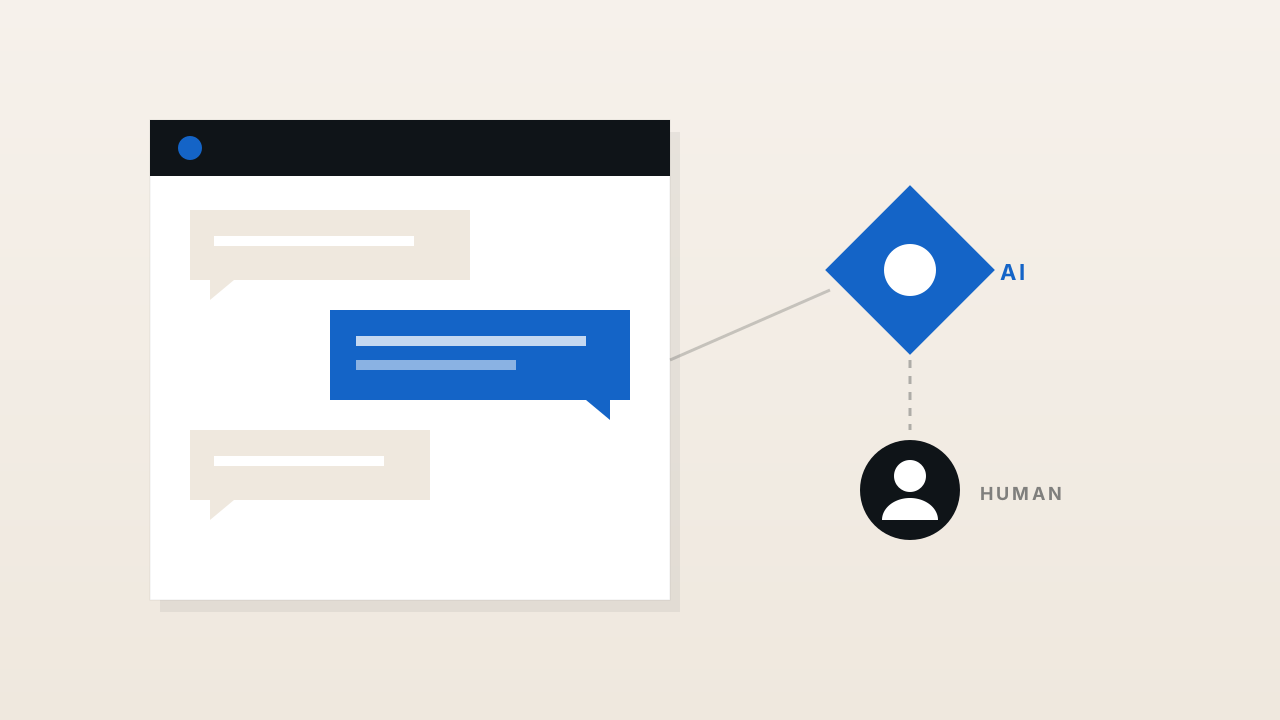
A modern AI support agent reads a customer's message, understands the intent, and responds using your business information: prices, policies, hours, order status, appointment slots. The better ones can take actions, like booking a slot or creating a ticket, and hand the conversation to a person when they should.
It is not a general chatbot that knows your business. It only knows what you give it, and it will fill gaps with plausible guesses unless it is built not to.
Automate these
| Task | Why it suits AI |
|---|---|
| Hours, location, prices, service lists | Repetitive, factual, easy to check |
| Order, delivery or application status | Looked up from your system, not invented |
| Appointment booking and rescheduling | Structured, with clear rules |
| Lead qualification | Asks the same five questions every time, then routes to sales |
| First-line triage | Collects details and categorises the issue before a person sees it |
| After-hours coverage | Customers get an answer or a clear next step instead of silence |
Keep these human
- Complaints and angry customers. A person who is upset wants to be heard by a person.
- Refunds, exceptions and anything involving money beyond looking up a status.
- Medical, legal or financial advice. A clinic's bot can book an appointment; it should not tell anyone whether a symptom is serious.
- Anything irreversible: cancellations with penalties, account closures, contract changes.
- Your best customers. Route known high-value clients to their account manager.
The risk is not theoretical. In a widely reported 2024 case, a Canadian tribunal held Air Canada responsible for a refund policy its website chatbot had invented, rejecting the argument that the chatbot was responsible for its own words. Whatever your agent says, your business has said.
Six design rules
- Scope it narrowly. Define the intents it handles and have it decline the rest politely. This is also now a WhatsApp requirement (below).
- Ground it in your own content. A maintained knowledge base of policies, prices and FAQs, not whatever the model remembers from the internet.
- Hand off fast and cleanly. One tap to a person, with the conversation history passed along so the customer does not repeat themselves. Tell customers when a human will reply.
- Say it is AI. Customers accept automation; they resent being misled about it.
- Log and review. Read a sample of conversations every week. Every wrong answer is a missing line in the knowledge base.
- Never let it promise what policy does not allow. Refunds, discounts and delivery dates come from rules or systems, not from the model's judgement.
WhatsApp's 2026 rule
Meta changed the WhatsApp Business Platform terms in October 2025, and from 15 January 2026 general-purpose AI chatbots are no longer allowed on the WhatsApp Business API. Business-specific AI remains permitted: support, bookings, order tracking and sales assistance, where AI supports a real business service rather than being the product itself.
For a small business, the practical meaning is simple: build a focused support agent, not an "ask me anything" assistant, and use an official WhatsApp Business Platform provider.
Data protection
An AI agent processes personal data: names, phone numbers, order details and sometimes health or financial information. Under the DPDP rules, fully enforceable from 13 May 2027:
- Tell customers what the agent collects and why, at the start of the conversation or in a linked notice.
- Treat the AI vendor as a data processor, with a contract that limits what it can do with your customers' data.
- Do not use conversations to train anything, or send them anywhere, without saying so.
- Keep sensitive categories out of the bot where you can: a clinic's agent should book appointments, not collect symptoms.
See our DPDP article for the full checklist.
How to tell if it is working
| Measure | What good looks like |
|---|---|
| Resolution rate | Share of conversations fully resolved without a person, for the intents you scoped |
| Escalation time | How quickly a handed-off customer hears from a person |
| Customer satisfaction | A one-tap rating after the conversation, compared with human-handled chats |
| Wrong-answer rate | From your weekly review; should fall month on month |
| Team time saved | Hours per week no longer spent on repetitive questions |
The honest summary
AI agents are now good enough to take the repetitive half of a small business's support load and to cover the hours your team sleeps. They are not good enough to be left alone with money, complaints or advice. Scope narrowly, ground in your own content, hand off fast, and review weekly. Like a website, an agent needs ongoing maintenance, not a one-off build.
Rasika builds and maintains scoped AI support agents for WhatsApp and web, with human handoff, DPDP-ready notices and a weekly review built into the service.
Frequently asked questions
Can I use an AI chatbot on WhatsApp Business in 2026? +
What should an AI support agent not handle? +
Is my business responsible for what its chatbot says? +
Does an AI chatbot need to comply with the DPDP Act? +
How do I measure an AI support agent? +
Sources (checked 1 October 2026)
- respond.io: WhatsApp's 2026 AI policy explained (15 January 2026, what remains allowed)
- Visito AI: WhatsApp policy on AI assistants (scope to business intents)
- TechRadar: Meta bans rival AI chatbots from WhatsApp (Business API terms change)
- Privy by IDfy: DPDP compliance guide 2026 (processor accountability, 13 May 2027)
This article is general information, current as of 3 October 2026. It is not legal or tax advice for your specific situation.