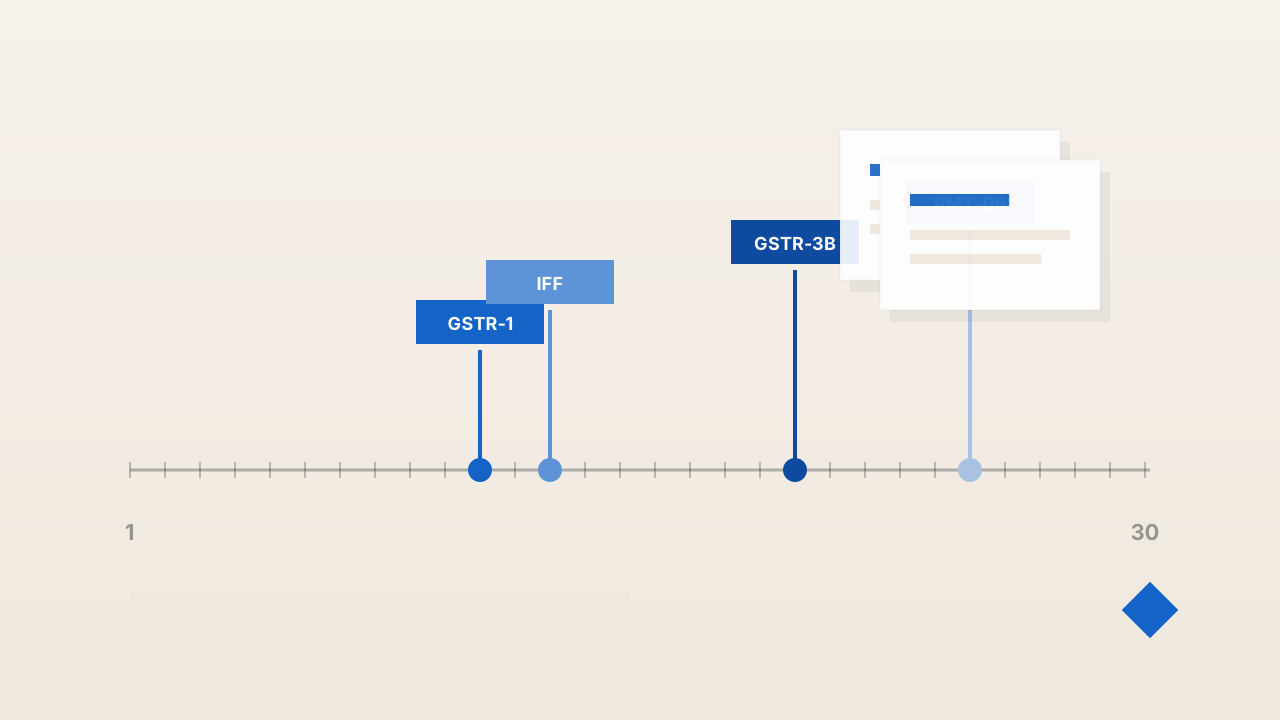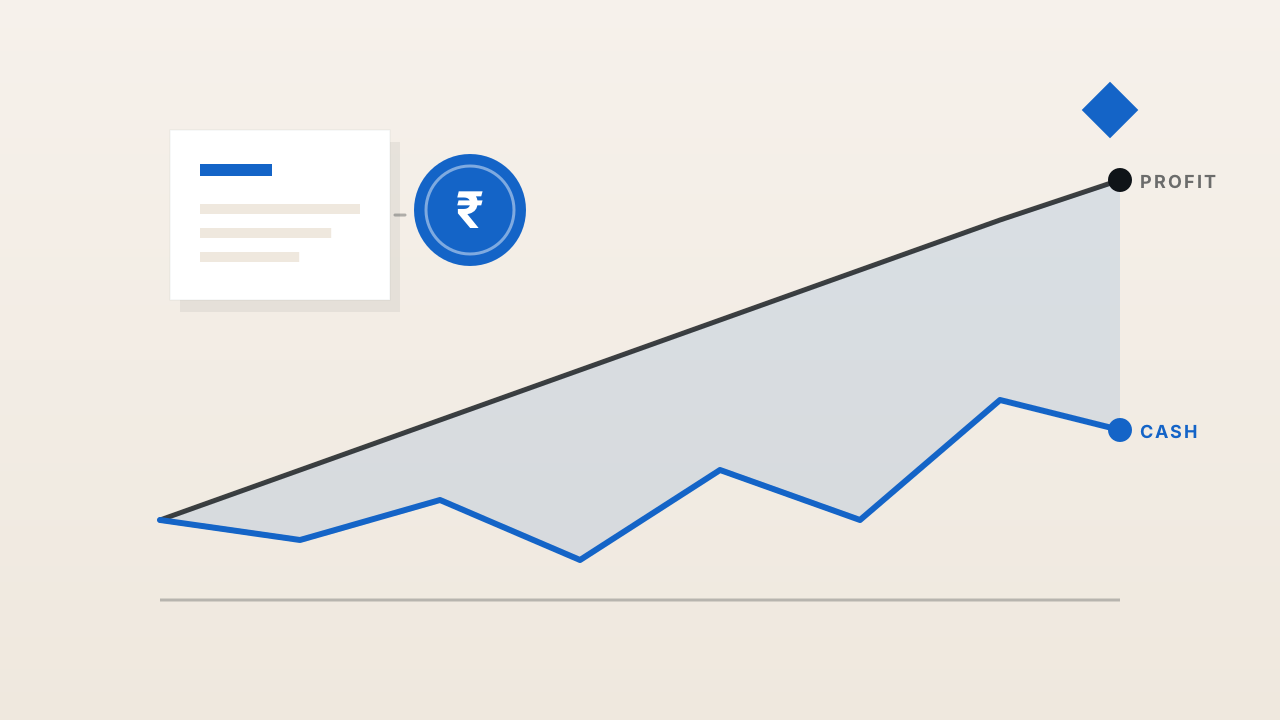
The 45-day rule: getting paid as an MSME, and paying MSMEs on time
If a micro or small business supplies you, the law gives you 15 days to pay, or 45 with a written agreement. Miss it and you lose a tax deduction and owe compound interest at three times the bank rate. If you are the small supplier, the same rule is the strongest collections tool you have. Here is how it works from both sides.
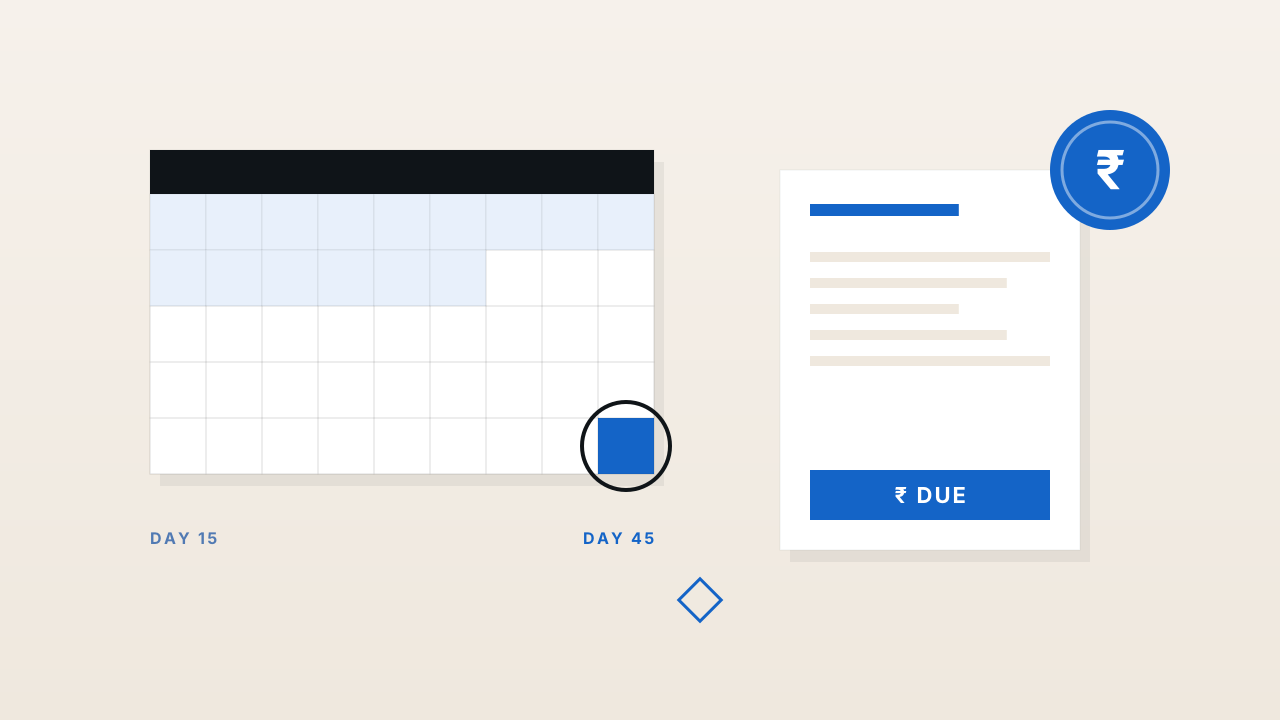
This rule is not new. The payment deadline has been in Section 15 of the MSMED Act since 2006. What gave it teeth was Section 43B(h) of the Income Tax Act, which from 1 April 2024 tied the buyer's tax deduction to paying on time. From Tax Year 2026-27, the same rule continues under Section 37 of the Income-tax Act, 2025.
The April 2025 revision of MSME limits made it matter more: far more suppliers now count as micro or small.
The deadline
| Situation | Pay within |
|---|---|
| No written agreement on payment terms | 15 days of accepting the goods or services |
| Written agreement with a payment period | The agreed period, but never more than 45 days from acceptance |
| Agreement says 60 or 90 days | Still 45 days; the longer term does not extend the limit |
The clock starts on acceptance. If the buyer does not reject goods or services within 15 days, they are treated as accepted.
Who it covers
Suppliers protected: micro and small enterprises that manufacture or provide services, with a Udyam registration. Since 1 April 2025, that means:
| Category | Investment in plant, machinery or equipment | Annual turnover |
|---|---|---|
| Micro | Up to ₹2.5 crore | Up to ₹10 crore |
| Small | Up to ₹25 crore | Up to ₹100 crore |
Not protected: medium enterprises, and wholesale or retail traders, even if they hold a Udyam certificate. The delayed-payment chapter of the MSMED Act covers manufacturing and services only.
Buyers affected: any business that computes actual profit and claims purchase costs as expenses: companies, LLPs, firms and individuals with business income. Businesses on presumptive taxation are generally unaffected, because they do not claim expenses separately.
What late payment costs the buyer
1. The deduction moves. If you miss the deadline and have not paid by 31 March, the expense is disallowed for that year and allowed only in the year you actually pay. A late payment made within the same financial year keeps the deduction but still owes interest.
Example: a small enterprise delivers ₹10 lakh of services in March 2026 under a 45-day agreement. You pay in July 2026. That ₹10 lakh is added back to your FY 2025-26 profit and deducted in FY 2026-27. At a 25% tax rate, that is ₹2.5 lakh of tax paid a year early.
2. Interest you cannot deduct. Section 16 of the MSMED Act makes the buyer pay compound interest at three times the RBI bank rate, compounded monthly, from the day after the due date. It overrides any lower rate in your contract. At a 5.5% bank rate, that is 16.5% a year. Section 23 of the same Act says this interest is not deductible for income tax.
3. Reporting. Tax auditors report dues not paid in time and inadmissible interest. Companies with dues to micro or small suppliers outstanding beyond 45 days also file a half-yearly MSME-1 return with the Registrar (see the annual ROC calendar); the return for April to September is due by 31 October.
If you are the MSME supplier: how to use it
Most Indian service businesses are micro enterprises and never use this protection. Four steps change that:
- Register on Udyam as a service or manufacturing enterprise. Registration is free and online. Our Udyam article explains why it should be your first registration.
- Put your Udyam number on every quotation and invoice, with a line such as "Payable within 45 days of acceptance under Section 15 of the MSMED Act, 2006." Buyers' accounts teams notice.
- Sign written payment terms. Without an agreement the deadline is 15 days, which is stronger for you, but a clear written term avoids arguments about acceptance dates.
- Escalate calmly. Send a reminder at day 30 and a formal notice citing Sections 15 and 16 at day 45. If that fails, file on the MSME Samadhaan portal (samadhaan.msme.gov.in). The complaint goes to the state's Micro and Small Enterprises Facilitation Council, which can order payment with interest.
If you are the buyer: the five-step fix
- Build a vendor master with each supplier's Udyam number, category (micro, small, medium) and activity (manufacturing, services, trading). Verify on udyamregistration.gov.in and refresh it every April.
- Record acceptance dates, not just invoice dates.
- Put written 30 or 45-day terms in place with every micro and small supplier.
- Run a weekly MSE payables report and pay them first.
- Clear all MSE dues before 31 March, then check again before the MSME-1 dates.
The honest summary
For buyers, the 45-day rule is a working capital rule dressed as a tax rule: if you stretch small suppliers to 90 days, you pay for it in advance tax and non-deductible interest. For small suppliers, it is leverage most never use. Either way, the fix is the same: know who is micro or small, write the terms down, and watch the calendar.
Rasika's Virtual Accounting plans flag MSE invoices before day 45 and prepare MSME-1. If you are the supplier, our MSME / Udyam Registration service gets you covered in days.
Frequently asked questions
What is the MSME 45-day payment rule? +
What happens if I pay an MSME late? +
Does the rule apply to traders? +
Which section applies from April 2026? +
How can an MSME recover a delayed payment? +
Sources (checked 1 October 2026)
- Tax Garden: the MSME 45-day payment rule (Sections 15, 16, 23; traders; Section 37; Samadhaan; year-end treatment)
- Busy: Section 43B(h) MSME payment rule (15/45-day table, Section 37(2)(g))
- Taxmann: revised MSME classification FAQs (April 2025 limits)
- Toolisky: MSME classification calculator (micro and small only; new Act mapping)
This article is general information, current as of 3 October 2026. It is not legal or tax advice for your specific situation.