Local SEO before blogging: why your Google Business Profile comes first
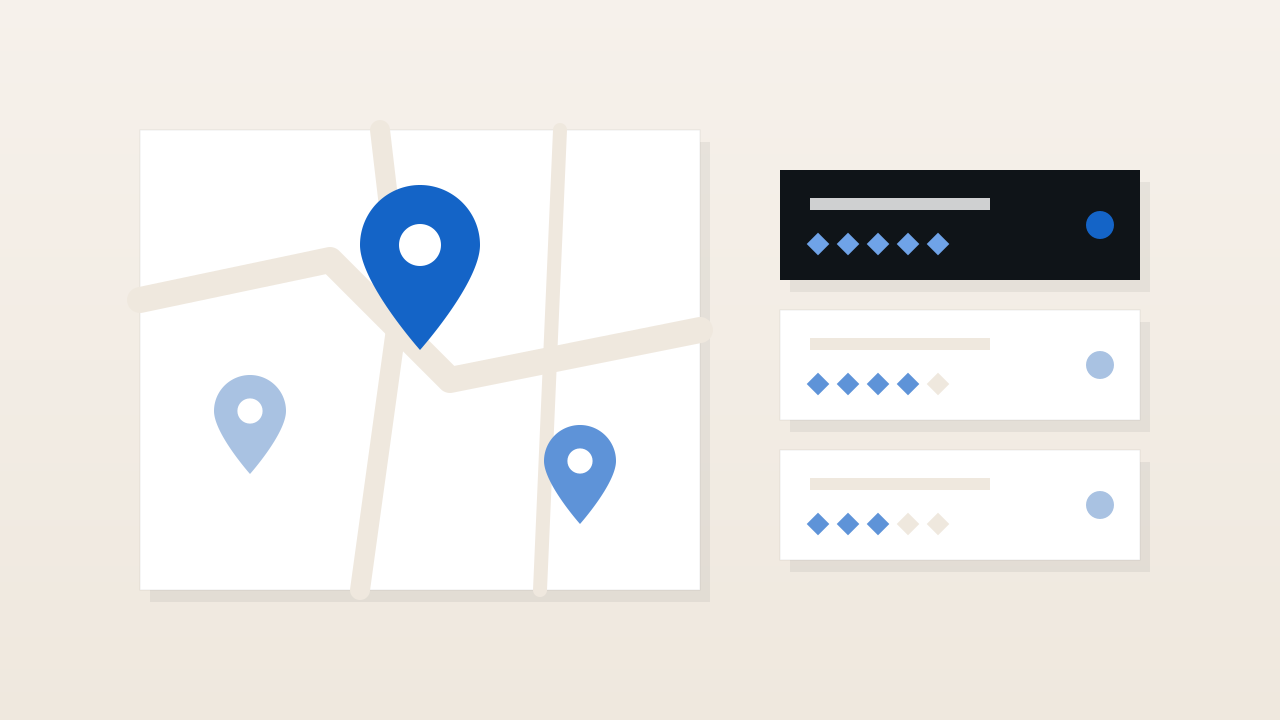
If your customers search "near me", the first thing they see is not your website or your blog. It is a map with three businesses on it. For clinics, coaching centres, cafés, salons, workshops and service firms, getting into that box is worth more than your next twenty blog posts. Here is how it works, in Google's own words, and a 30-day plan.
This may seem an odd thing to read on a blog. Blogging is useful; it builds trust and ranks for questions people research. But for a business that serves a city, the order of work matters: the Google Business Profile first, a clear website second, content third.
What Google says decides local ranking
Google states that local results are based mainly on three things:
- Relevance: how well your Business Profile matches what someone searched for. Complete, detailed information helps Google match you.
- Distance: how far you are from the person searching, or the location they searched for.
- Prominence: how well-known you are, based on signals such as how many websites link to you and how many reviews you have. More reviews and positive ratings can help.
Google also says plainly that there is no way to request or pay for a better local ranking. Anyone selling you "guaranteed Maps ranking" is selling something Google says does not exist.
You cannot change distance. You can change relevance in an afternoon and prominence over months.
The 30-day plan
Week 1: claim, verify, complete
- Claim and verify your profile. Google says verified businesses are more likely to show in results.
- Choose the most specific primary category ("Pediatric dentist", not "Dentist"; "Chartered accountant", not "Consultant"), then add accurate secondary categories.
- Fill everything: address (or service area if customers do not visit you), hours including holiday hours, phone, website, attributes such as parking or wheelchair access, and a description written for customers, not keywords.
- Make your name, address and phone number identical on your website, profile, Justdial, IndiaMART, Practo or whichever directories matter in your trade. Inconsistent details confuse both customers and search engines.
Week 2: show the place
- Add real photos: exterior (so people can find you), interior, team and work. Replace stock images.
- List services or products with short descriptions and, where it makes sense, prices.
Weeks 3 and 4: start the review engine
- Ask every satisfied customer, at the moment of satisfaction: after a successful treatment, a delivered project or a good class. A WhatsApp message with the direct review link works well.
- Reply to every review, good and bad, within a few days. Google notes that replies show you value feedback.
- Post updates occasionally: offers, events, new services. Treat it as a notice board, not a social feed.
The review rules that get profiles penalised
Google's Maps content policy prohibits fake engagement. In practice, do not:
- Offer discounts, gifts or cashback in exchange for reviews
- Ask only happy customers to review while steering unhappy ones elsewhere ("review gating")
- Post reviews from staff, family or agencies, or buy them
- Put customer names or phone numbers into public replies
A handful of genuine reviews every month beats a sudden burst of fifty, which is exactly the pattern that draws scrutiny.
Where your website fits
Your Business Profile brings the click; your website closes the enquiry, and a consistent brand makes both look like the same business. The page it links to should load fast on a phone, state what you do and where in the first screen, show the same address and phone number, and make it one tap to call or WhatsApp. If you serve several areas or offer distinct services, give each its own page with real detail, not a copied paragraph with the suburb name swapped.
One caution: every enquiry form and WhatsApp opt-in now collects personal data under the DPDP rules. See our DPDP article for what the form must say.
How to tell if it is working
Your Business Profile shows how many people found you, how (direct search for your name, or a category search like "physiotherapist near me"), and what they did: calls, direction requests, website clicks. Category searches rising is the real sign of progress, because those people did not know your name yet.
The honest summary
For a local business, the best marketing asset is free and usually half-finished. Complete the profile, make your details consistent everywhere, ask for reviews honestly and reply to all of them. Do that for three months before you spend on ads or commission a content calendar.
Rasika's Search & Content service sets up and manages your Business Profile, cleans your listings and builds the local pages on your website, with monthly reporting on calls and enquiries.
Frequently asked questions
How does Google decide local rankings? +
Can I pay Google for a better Maps ranking? +
Can I offer a discount for Google reviews? +
Do I need a physical address for a Google Business Profile? +
Should I blog or optimise my Business Profile first? +
Sources (checked 1 October 2026)
- Google Business Profile Help: tips to improve your local ranking (relevance, distance, prominence; no paid ranking; verification, completeness, reviews, photos)
- Google Business Profile Help: tips to get more reviews (review requests and replies)
This article is general information, current as of 3 October 2026. It is not legal or tax advice for your specific situation.