
What a brand identity engagement should actually deliver (and who owns it afterwards)
Many small businesses pay for a "brand identity" and receive a logo in three colours and a JPEG. Then the printer asks for vector files, the website developer asks for font licences, and a year later the designer's portfolio shows your logo for sale. Here is what a real engagement delivers, and the one legal document most founders never ask for.
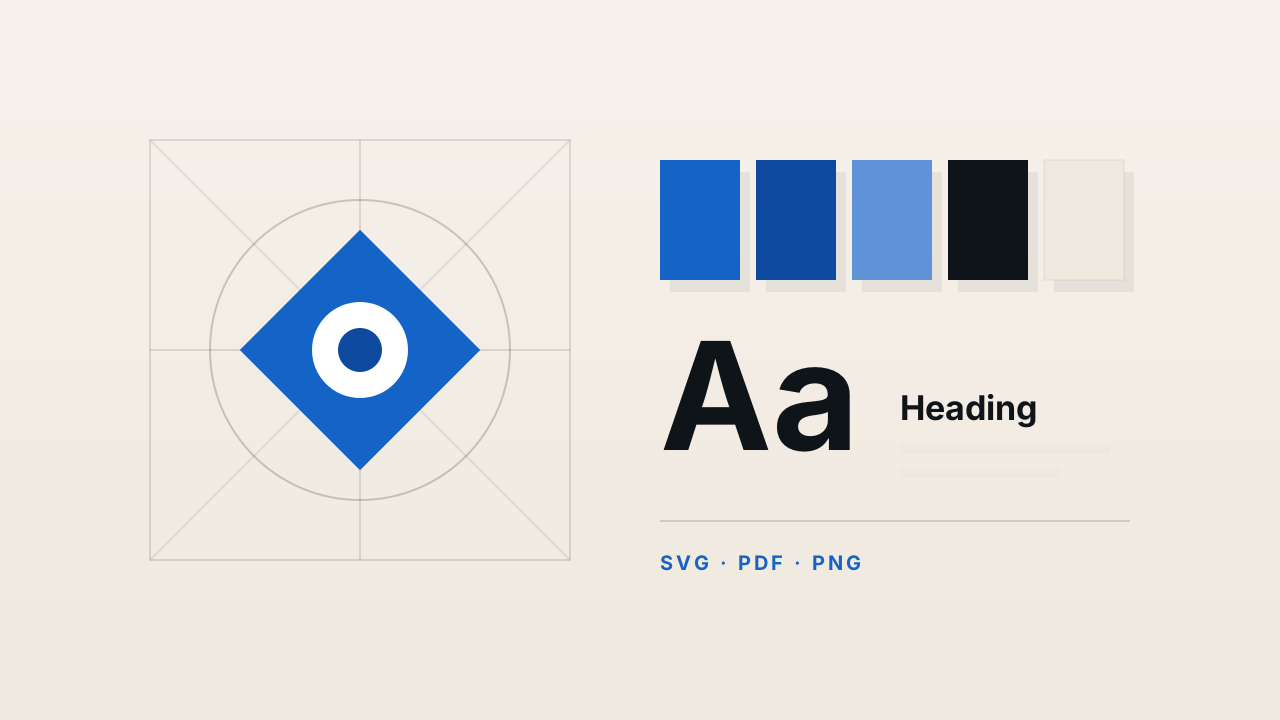
A brand identity is the system that makes a business recognisable and consistent across every place it appears: website, invoice, signboard, social post, proposal, uniform and packaging. The logo is one part of it. The system is what you are paying for.
The 12 deliverables to expect
Strategy (what the design is based on)
- Positioning summary: who the business serves, what it promises, and how it differs from two or three named competitors. One page is enough.
- Voice and tone: how the brand writes, with examples of do and don't. This is what keeps your website, WhatsApp replies and proposals sounding like one company.
Core identity
- Logo suite: the primary logo, a horizontal and a stacked version, a symbol or monogram for small spaces, and one-colour versions for stamps, embroidery and fax-quality printing.
- Colour palette: primary and secondary colours with exact values for screen (HEX and RGB) and print (CMYK, and Pantone if you print in volume).
- Typography: a heading and a body typeface, with rules for sizes and weights, and confirmation that you are licensed to use them.
- Supporting elements: patterns, icon style, photography or illustration direction, so new material does not drift.
Application
- Brand guidelines document: the rulebook, covering clear space, minimum sizes, colour usage, what not to do and examples. Usually 15 to 40 pages for a small business.
- Business stationery: visiting card, letterhead, email signature and invoice template.
- Digital templates: social media post and story templates, a presentation template and profile images sized for each platform.
- Key applications relevant to you: signage, packaging, uniform or vehicle, as agreed in scope.
Handover
- Source and export files (see the table below), organised and named so someone else can use them.
- A signed copyright assignment transferring ownership of the logo and artwork to your business. More on this below; it matters more than anything else on this list.
The files you should receive
| Use | Format | Why |
|---|---|---|
| Printing, signage, embroidery | SVG, EPS or PDF (vector) | Scales to any size without blurring |
| Website and apps | SVG and PNG with transparent background | Sharp on every screen, no white box |
| Documents and slides | PNG in light and dark versions | Works on any background |
| Editing later | Original design files (Figma, Illustrator or equivalent) | So a future designer does not start from scratch |
| Fonts | Font files or links, with licence details | So your developer and printer can use them legally |
If you receive only JPEGs, you have not received a brand identity.
Check accessibility before you approve colours
A palette that looks elegant on a designer's screen can be unreadable on a phone in sunlight. Text colours should meet the WCAG AA contrast ratio of at least 4.5:1 against their background for normal body text. Ask your designer to show the contrast check, especially for light grey text and brand colours used for buttons.
The legal part: who owns your logo
This is the question almost nobody asks, and Indian law gives an uncomfortable default answer.
Under Section 17 of the Copyright Act, 1957, the author of a work is its first owner. An employer owns work its employees create in the course of employment. But a freelancer or agency you commission usually keeps the copyright in the logo, even after you have paid in full, unless ownership is transferred in writing.
Section 19 sets out what that written assignment must do: be signed by the designer, identify the work, and state the rights transferred, the duration and the territory. If the assignment does not state a duration, the law presumes five years; if it does not state a territory, it presumes India only. A one-line "all rights belong to the client" clause in an email is weak protection.
Three practical rules:
- Sign the assignment before work starts, as part of the engagement agreement, effective on payment. The same logic applies to NDAs and founders' agreements: a template that almost fits is weaker than it looks.
- Make it perpetual and worldwide, and cover all versions and drafts.
- Run a trademark search before you finalise the logo and name, and file your trademark once the design is final. Copyright and trademark protect different things; you want both.
How to judge a proposal
A credible brand identity proposal lists deliverables by name, states the number of concepts and revision rounds, names the file formats, includes the copyright assignment, and gives a timeline. If a proposal says only "logo design and branding", ask what you will actually receive.
The honest summary
A brand identity is worth paying for when it gives you a system you can apply without the designer in the room, files that work everywhere, and clear legal ownership. Ask for all three in writing before you sign.
Rasika's Branding & Identity package delivers all 12 items, including a Section 19-compliant copyright assignment and a trademark search before the logo is final.
Frequently asked questions
What should a brand identity package include? +
Do I own the logo my freelancer designed? +
What file formats should I get for my logo? +
What happens if the assignment does not state a duration? +
Should I trademark or copyright my logo? +
Sources (checked 1 October 2026)
- Intepat: copyright law in India, a practical guide (commissioned logos do not transfer on payment; Section 19 requirements)
- Unimarks Legal: copyright ownership in freelance and commissioned works (freelancer default ownership, assignment deed)
- Kayser Legal: copyright ownership in employment and freelance agreements (five-year and India-only presumptions)
- Khurana & Khurana: copyright ownership in employment and freelance contracts (Section 17(c) employer rule)
This article is general information, current as of 3 October 2026. It is not legal or tax advice for your specific situation.