Bookkeeping vs. accounting vs. a CA: who does what
The division of labour behind clean books, and the specific places small businesses overpay by hiring the wrong one.
"I have a CA, so my accounts are sorted." It is one of the most common things founders say, and one of the most common ways they overpay, or just as often underspend in the wrong place. The confusion is understandable: bookkeeping, accounting and chartered accountancy all touch your numbers, the words get used interchangeably, and nobody explains where one ends and the next begins. So here is the division of labour, plainly, and where small businesses tend to lose money by getting it wrong.
The three roles, in plain English
The bookkeeper: records what happened
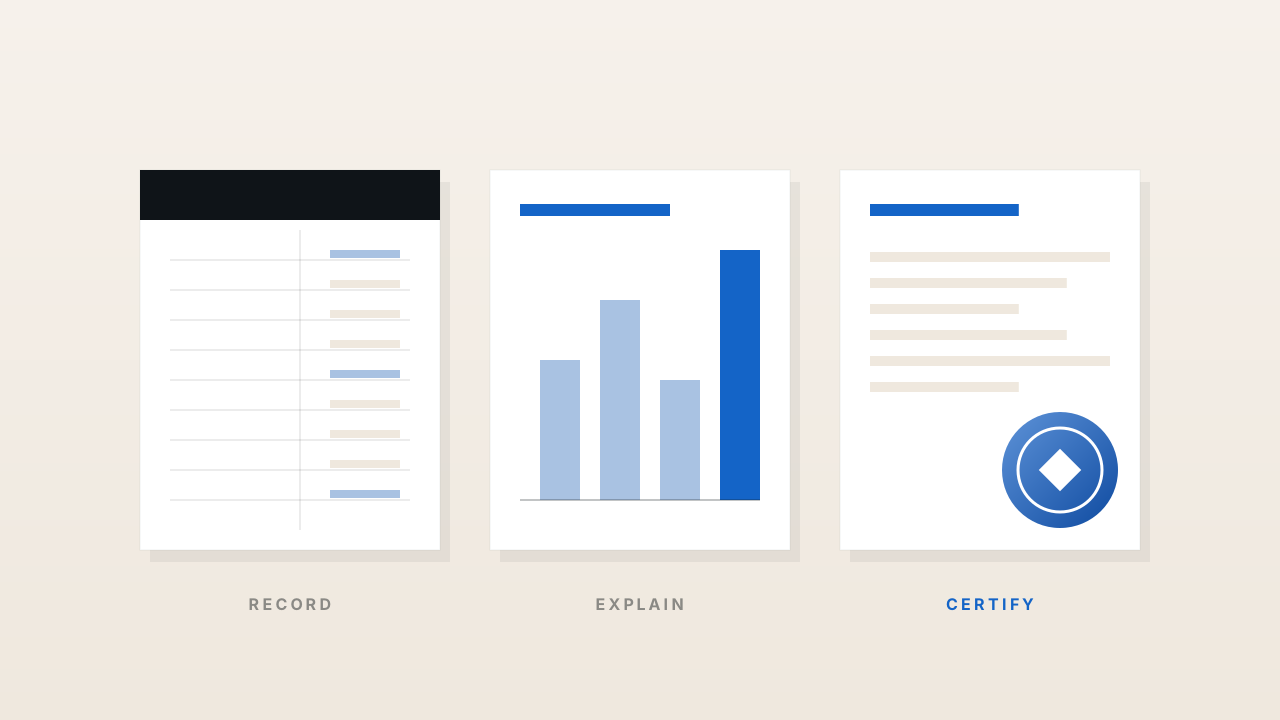
Bookkeeping is the daily, transactional groundwork: recording every sale, purchase, payment and receipt; reconciling your bank statements; raising and tracking invoices; maintaining the ledgers. It is detail-driven and clerical in the best sense: meticulous, consistent, done weekly or monthly. A good bookkeeper keeps your financial house in order so that, at any moment, your records reflect reality. Put simply, bookkeeping is designed to generate data about a business's activities.
The accountant: explains what it means
Accounting takes that data and turns it into information. The accountant prepares your financial statements (profit and loss, balance sheet), interprets cash flow, flags where you are leaking money, advises on structure and tax efficiency, and helps you plan. Where the bookkeeper asks "is this recorded correctly?", the accountant asks "what is this telling us, and what should we do about it?" It is the analytical, strategic layer, and it works at a less frequent cadence: monthly reviews, quarterly planning, annual accounts.
The chartered accountant (CA): certifies and signs
In India, a Chartered Accountant is a licensed professional who has cleared the ICAI examinations and can do things the other two cannot: conduct a statutory audit, sign off on audited financial statements, conduct a tax audit, represent you in certain tax matters, and provide the certified assurance that banks, investors and the government require. A CA is, in a sense, an accountant with statutory authority and accountability. You need one for the things that legally require a CA's signature, not for everything.
| Role | Cadence | Core question |
|---|---|---|
| Bookkeeper | Daily or weekly | Is everything recorded and reconciled? |
| Accountant | Monthly or quarterly | What do the numbers mean, and what next? |
| Chartered Accountant | As required | What must be audited, certified or signed? |
Where small businesses overpay
Now the useful part: the specific, recurring mistakes that cost money.
Paying CA rates for bookkeeping work
This is the big one. A Chartered Accountant's time is expensive because of what a CA is qualified to do. If you hand a CA your shoebox of receipts and ask them to do the day-to-day data entry and reconciliation, you are paying premium rates for clerical work that a competent bookkeeper does for a fraction of the cost. The CA should be reviewing and certifying, not keying in transactions.
Buying a CA when you needed a system
Many founders hire a CA expecting strategic financial guidance and end up with someone who files their returns once a year and is otherwise unreachable. That is not the CA's failing; it is a mismatch. Routine monthly insight, cash-flow visibility and clean ongoing books come from a bookkeeping-and-accounting function, not from an annual compliance engagement. If you want to understand your numbers month to month, that is a different service from year-end certification. It is also where problems like a profitable business running out of cash get caught early.
Treating the three as a hierarchy instead of a team
A bookkeeper is not a junior accountant, and an accountant is not a discount CA. They are different functions that work best together: the bookkeeper keeps the records accurate, the accountant interprets them and plans, and the CA certifies what the law requires certified. Skip the bookkeeper and your accountant spends expensive hours cleaning up data. Skip the accountant and you have tidy books nobody is reading for insight. Skip the CA and you cannot complete your audit.
The honest test. Ask what you actually need this month. Accurate records and reconciled accounts? That is bookkeeping. An explanation of your margins and a plan? Accounting. A signed audit or a certified statement for a bank? A CA. Most early businesses need a lot of the first two and a little of the third, and pay as though they need the reverse.
What changed in 2026, and who owns it
Two changes this year show why the bookkeeping-and-accounting layer matters more than the annual visit:
- A new Income-tax Act. From 1 April 2026, the Income-tax Act, 2025 replaced the 1961 Act. Tax rates did not change, but TDS sections, forms and vocabulary did: Section 393 instead of 194J, Form 130 instead of Form 16, "Tax Year" instead of assessment year. Someone has to update your payroll, TDS templates and contracts, and that is month-to-month accounting work.
- Paying small suppliers on time. If micro or small enterprises supply you, an invoice paid after the 45-day limit and still unpaid at the year end loses its tax deduction for that year, and late payment carries interest at three times the bank rate. Tracking it is a bookkeeping job; see the 45-day MSME rule.
The same goes for GST: the monthly GST routine is relentless rather than complex, and it fails when nobody owns it.
What a small business actually needs, and when
- From day one: bookkeeping, kept current, so you are never reconstructing a year at the last minute.
- Monthly: accounting that gives you a P&L, a cash-flow view and a person who can tell you what it means.
- At statutory milestones: a CA for the statutory audit (every company needs one every year, whatever its size), a tax audit if your turnover crosses the threshold (₹1 crore, or ₹10 crore where cash receipts and payments each stay within 5%), certified filings, and matters that legally need a CA's sign-off.
The most cost-effective structure for an early-stage business is an integrated finance function that does the bookkeeping and accounting continuously, and brings in CA-level certification only where it is actually required, rather than defaulting to the most expensive professional for every task.
Where we fit
This is exactly how our virtual accounting service is built. You get the full finance function (bookkeeping, monthly financial statements, GST and TDS filing, an MIS report and a person to review it all with), priced by your transaction volume, not by the hour. The clerical work is done at clerical efficiency; the analysis is done properly; and statutory certification happens where the law requires it. If you are not sure which of the three you are currently paying for, a short conversation will usually find the gap.
Rasika's Virtual Accounting is a full finance function: bookkeeping, monthly statements, GST and TDS filing, an MIS report and a named person to review it with, priced by transaction volume.
This article is general information, current as of 3 October 2026. It is not legal or tax advice for your specific situation.