GST returns without fear: GSTR-1, GSTR-3B, QRMP and the three-year time bar
Getting a GSTIN takes three days now. Keeping it clean takes a monthly habit. This is the plain-English map of which returns you file, when, what each one does, and the three mistakes that cost small businesses the most.
Once registered, a regular GST taxpayer files at least two recurring returns and one annual one, even in months with no sales. The September 2025 rate reform moved most goods and services to the 5% and 18% slabs, but it did not change the return forms or their dates.
The three returns that matter
GSTR-1: what you sold. Invoice-level detail of B2B sales, summaries of B2C sales, exports, and credit and debit notes. Your B2B customers' input tax credit depends on it, so a late or wrong GSTR-1 becomes their problem, and then yours.
GSTR-3B: what you owe. A summary return in which you declare output tax, claim input tax credit and pay the balance. The tax is paid with this return.
GSTR-9: the annual return. A yearly summary, due by 31 December after the financial year. It is optional up to ₹2 crore of aggregate turnover and mandatory above it. Above ₹5 crore, you also file GSTR-9C, a reconciliation statement.
Monthly or quarterly: the QRMP choice
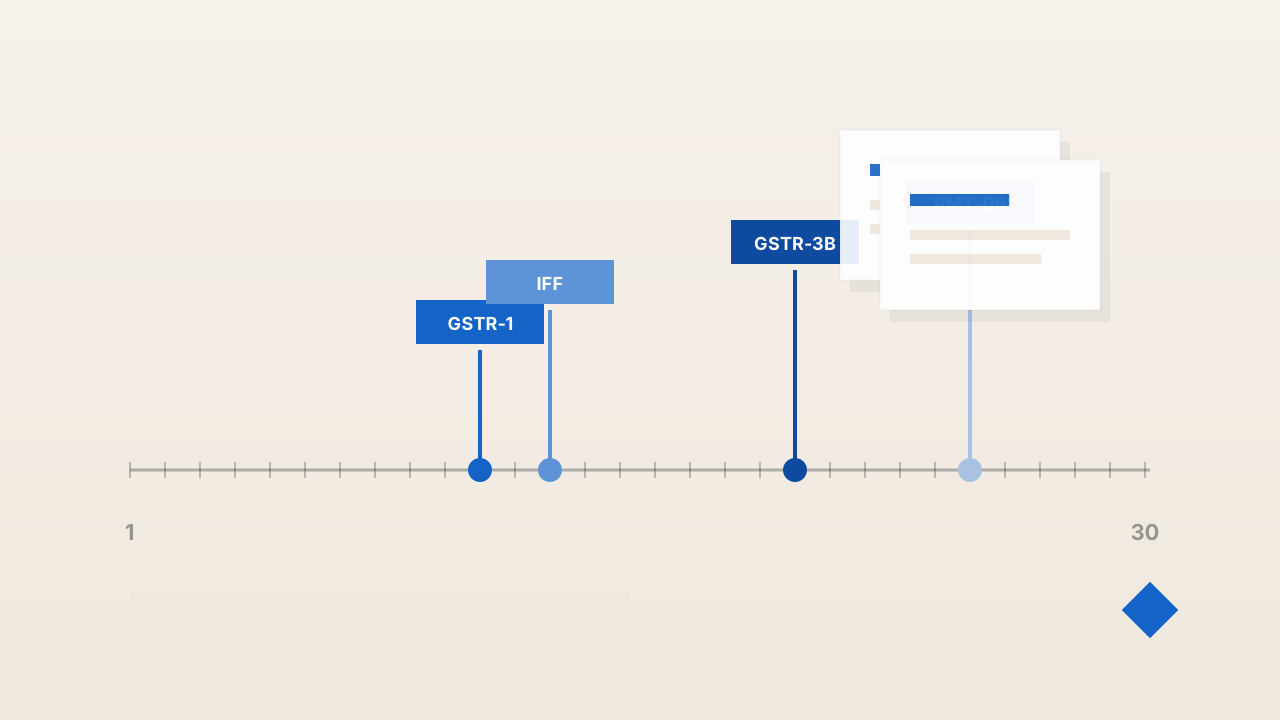
If your aggregate turnover is up to ₹5 crore, you can choose the Quarterly Return Monthly Payment (QRMP) scheme: returns every quarter, tax every month.
| Monthly filer | QRMP filer | |
|---|---|---|
| GSTR-1 | 11th of the next month | 13th of the month after the quarter |
| B2B invoices in months 1 and 2 | In monthly GSTR-1 | Optional upload through the Invoice Furnishing Facility (IFF) by the 13th |
| Tax payment in months 1 and 2 | With monthly GSTR-3B | Challan PMT-06 by the 25th |
| GSTR-3B | 20th of the next month | 22nd or 24th of the month after the quarter, by state (22nd for Maharashtra) |
Which to choose: QRMP cuts filings from 24 a year to 8, which suits most small service businesses. If your clients are large companies that want their credit every month, upload your B2B invoices through IFF in months 1 and 2 so their GSTR-2B shows your invoices on time.
How input tax credit actually works now
You do not claim credit from your own purchase register any more. You claim what appears in GSTR-2B, an auto-generated statement built from what your suppliers report in their GSTR-1. If a supplier files late or makes a mistake, your credit waits.
Two more rules catch small businesses:
- Pay your suppliers within 180 days of the invoice, or reverse the credit you took on that invoice until you do.
- Claim credit on time. Credit for a financial year must be claimed by 30 November of the following year, or the date you file the annual return, if earlier.
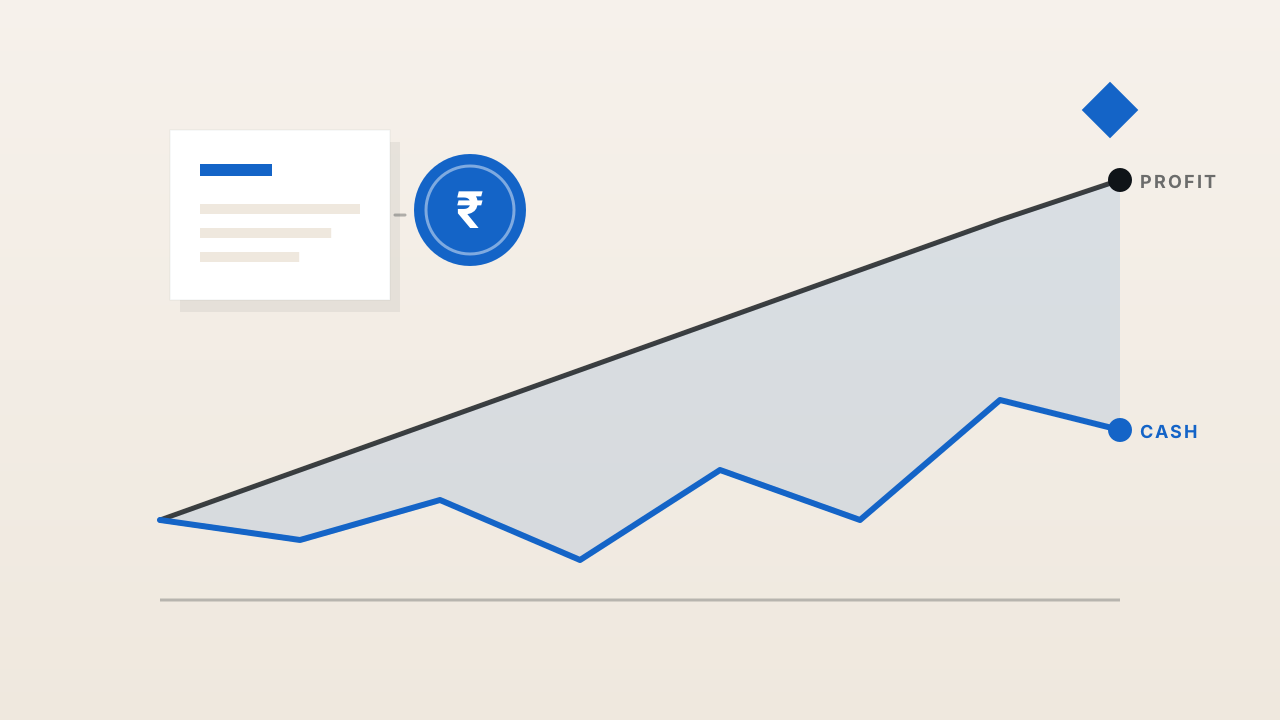
Our working capital guide shows what slow supplier filings and GST timing do to your cash.
What changed in 2025 and 2026
- GSTR-3B is increasingly locked. Tax liability auto-filled from your GSTR-1 or IFF is being hard-locked in GSTR-3B. Correct mistakes in GSTR-1, or through the amendment return GSTR-1A, before you file GSTR-3B, not in it.
- The three-year time bar. A GST return more than three years past its original due date can no longer be filed at all. Businesses that stopped filing "for a while" can be permanently locked out of regularising those periods.
What late filing costs
| Default | Cost |
|---|---|
| Late GSTR-1 or GSTR-3B with tax | ₹50 per day (₹25 CGST + ₹25 SGST), capped by turnover slab |
| Late nil return | ₹20 per day, with a lower cap |
| Tax paid late | Interest at 18% a year on the unpaid amount |
| Late GSTR-9 | ₹200 per day, subject to a turnover-linked cap |
| Returns not filed for a long period | Registration can be suspended or cancelled |
A nil return is still a return. Small businesses that go quiet for six months regularly discover a few thousand rupees of nil-return late fees and a suspended GSTIN.
The monthly routine that prevents all of this
- By the 5th: all sales invoices for last month raised and recorded.
- By the 8th: GSTR-2B reviewed; chase suppliers whose invoices are missing.
- By the 11th or 13th: GSTR-1 (or IFF) filed.
- Before GSTR-3B: liability checked against GSTR-1; no "fixing it in 3B".
- By the 20th, 22nd or 25th: tax paid.
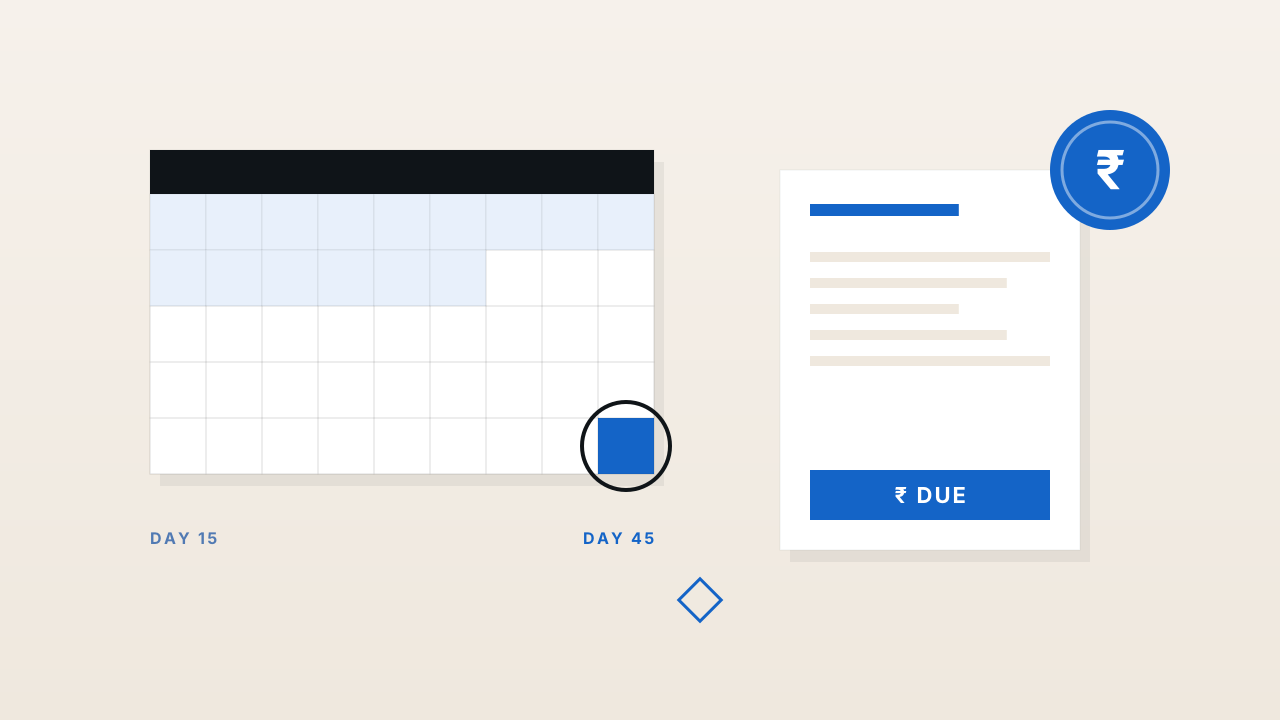
- Every quarter: unpaid supplier invoices over 150 days flagged, before the 180-day reversal.
The honest summary
GST compliance is not complex for a small business; it is relentless. Most penalties we see come from gaps: a month skipped, a supplier who did not file, a correction attempted in the wrong return. A fixed monthly routine, owned by one named person, prevents nearly all of them. Our piece on bookkeeping vs. accounting vs. a CA explains who that person should be.
Rasika's GST Return Filing service runs this routine for you at a fixed monthly fee, including GSTR-2B reconciliation and supplier follow-ups.
Frequently asked questions
What are the GST return due dates? +
Who can opt for QRMP? +
Is GSTR-9 mandatory for small businesses? +
Do I need to file GST returns if I had no sales? +
Can I file an old GST return that I missed? +
Sources (checked 1 October 2026)
- TAXAJ: GST return filing in India 2026 (QRMP dates, PMT-06, GSTR-3B locking, GSTR-9C)
- Tax Garden: types of GST returns 2026 (GSTR-9 threshold, late fees, GST 2.0 did not change returns)
- Cashfree: GST return filing guide 2026 (GSTR-1A, late fee examples)
- Razorpay: GST compliance November 2025 (three-year time bar)
- Beancount: GST 2.0 and ITC matching (GSTR-2B basis, 180-day supplier payment)
This article is general information, current as of 3 October 2026. It is not legal or tax advice for your specific situation.