Why profitable businesses run out of cash: working capital for Indian small businesses
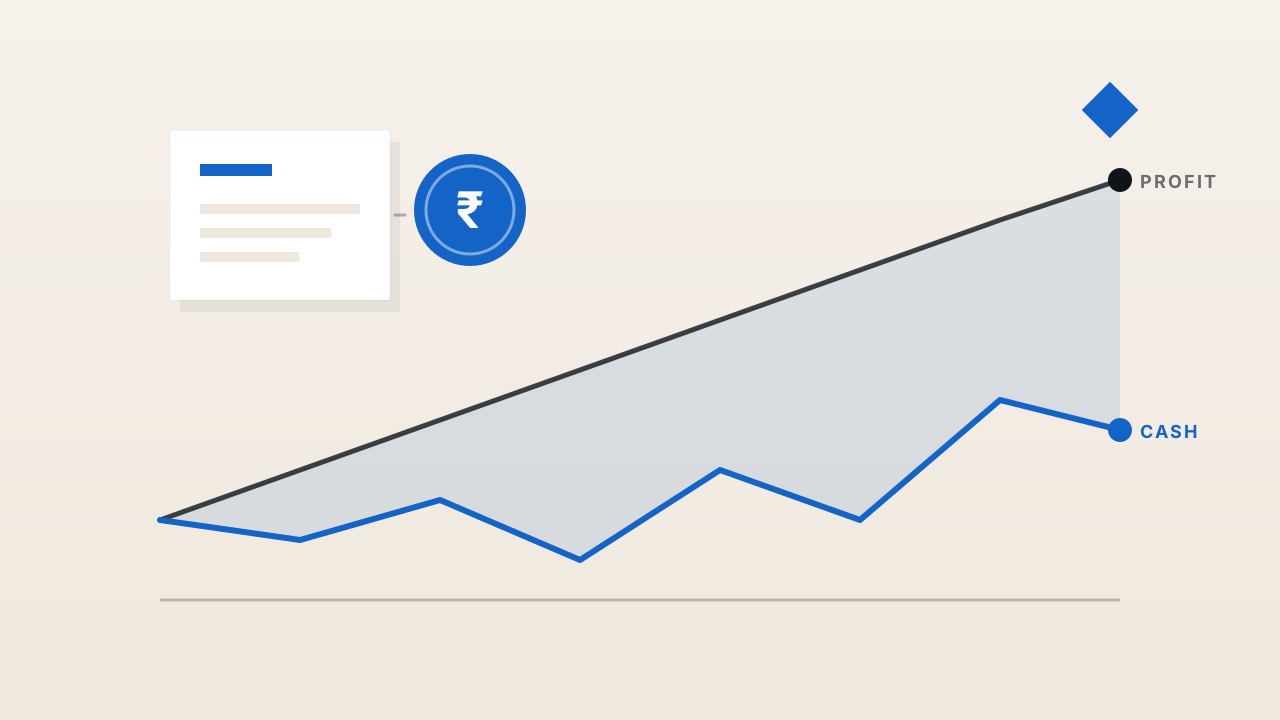
Your accountant says you made a profit. Your bank balance says you cannot pay salaries on the 7th. Both are right. The gap between them is working capital, and in India the tax system widens it in ways most owners only discover mid-crisis. Here is how it works and what to do about it.
Profit and cash are different clocks
Profit is counted when you earn it: when the invoice is raised. Cash arrives when the customer pays. In between, you have already paid salaries, rent, suppliers and, in India, tax on money you have not received.
Working capital is the money tied up in running the business day to day: what customers owe you, plus stock, minus what you owe suppliers. The faster that cycle turns, the less cash you need to grow.
The cash conversion cycle
Cash conversion cycle = days to collect from customers + days stock sits + days of work in progress − days you take to pay suppliers
A services firm that collects in 60 days and pays its team and suppliers in 30 has a 30-day gap to fund, every month, forever. When revenue grows, that gap grows with it. That is why fast-growing businesses are the ones that run out of cash first.
Where Indian tax makes it worse: a worked example
A Pune services firm raises an invoice on 31 March for ₹10 lakh of work, plus 18% GST: ₹11.8 lakh in total. The client pays in 60 days and deducts 10% TDS on professional fees.
| Date | What happens | Cash |
|---|---|---|
| 31 March | Invoice raised for ₹11.8 lakh | ₹0 received |
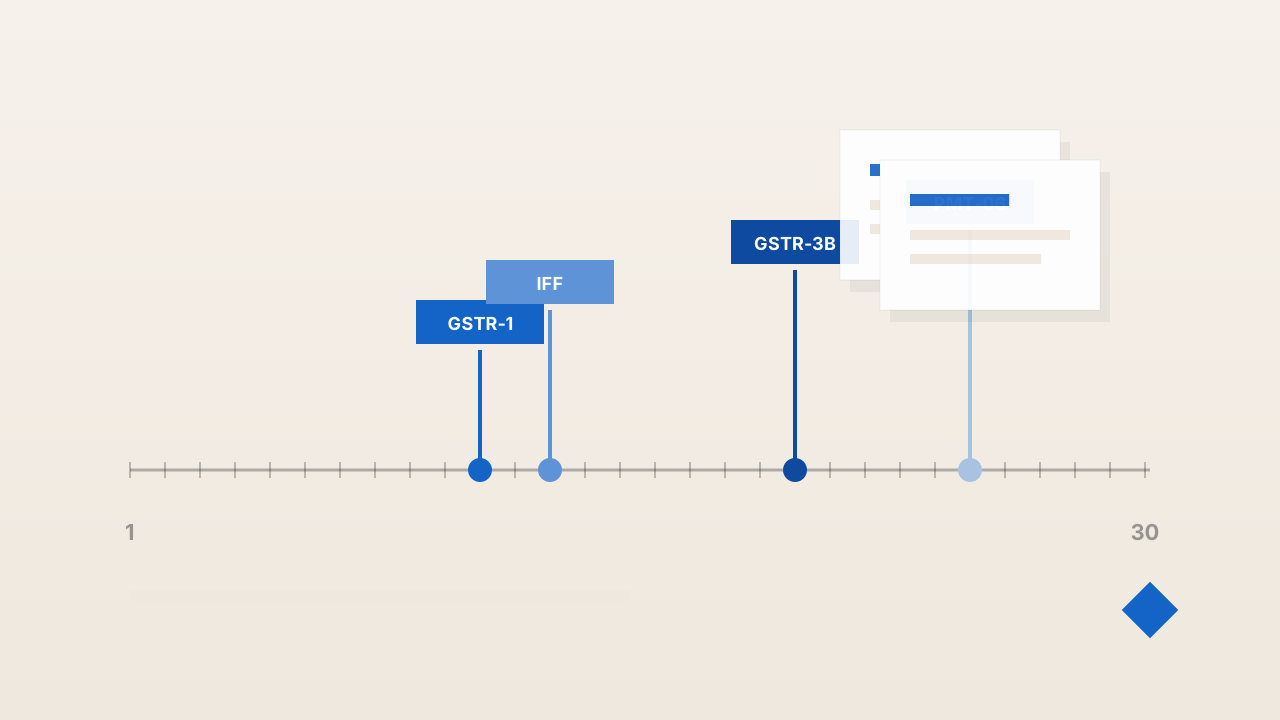
| 20 April | GST of ₹1.8 lakh due with the monthly return | −₹1.8 lakh |
| 7 April and 7 May | Team salaries paid for the work already done | − salaries |
| 30 May | Client pays ₹11.8 lakh minus ₹1 lakh TDS | +₹10.8 lakh |
| Months later | The ₹1 lakh TDS is adjusted against your tax, or refunded if you overpaid | Locked until then |
For nearly two months, the firm has financed its client's GST and its own payroll. Across twelve months of invoices like this, the TDS alone can add up to a sizeable sum sitting with the tax department. Quarterly GST filing under QRMP changes the paperwork, not the obligation to pay tax monthly.
Seven fixes that work
1. Invoice the day work is done. Every day between delivery and invoice adds a day to collection. Under GST, service invoices generally must be issued within 30 days of supply anyway.
2. Change the payment terms, not just the reminders. Advances, milestone billing and monthly retainers billed in advance shrink the gap more than any collections effort. For a new client, 30% to 50% upfront is normal and reasonable.
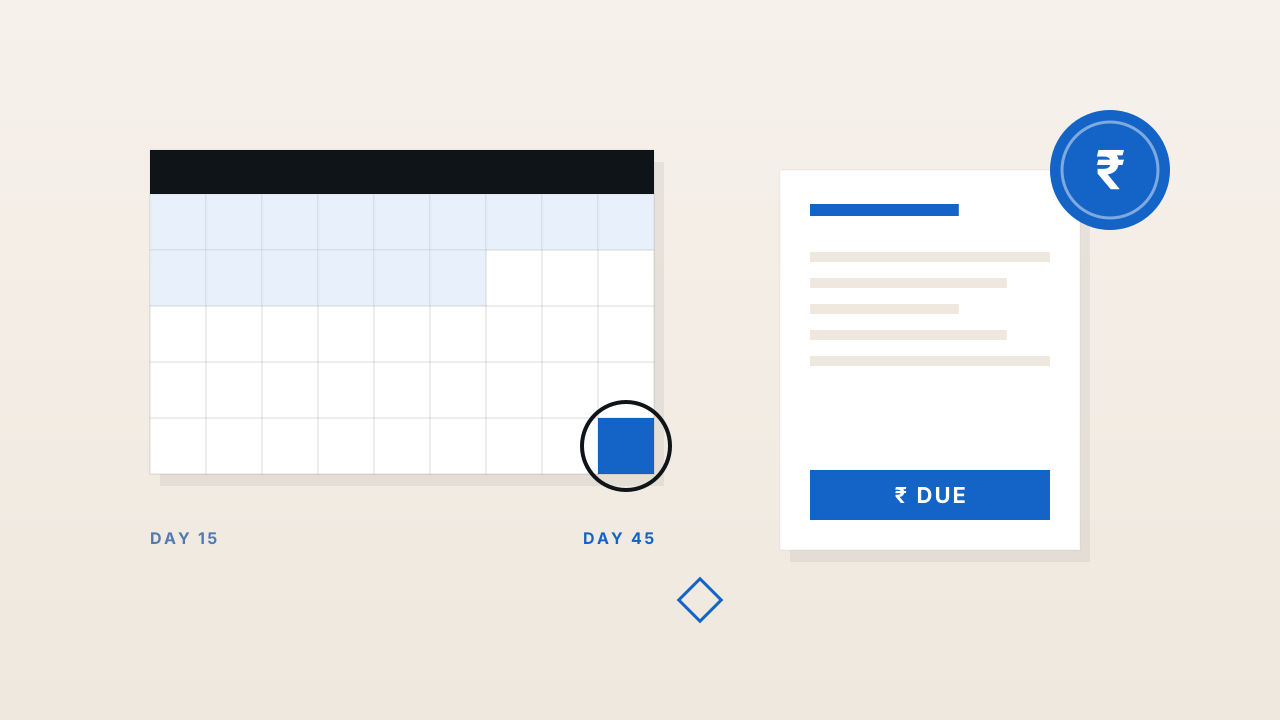
3. Use the law that protects you. If you are a Udyam-registered micro or small enterprise in manufacturing or services, buyers must pay you within 45 days, or 15 without a written agreement, with interest at three times the bank rate if they do not. See our MSME 45-day rule article.
4. Use TReDS with large buyers. Companies with turnover above ₹250 crore must be registered on the RBI-regulated Trade Receivables Discounting System. If your customer is one of them, you can sell your approved invoice on TReDS and receive cash in days rather than waiting for the due date, at a financing cost.
5. Manage TDS actively. Reconcile the TDS your customers deducted against Form 26AS and the annual information statement every quarter, so you claim it on time. Where your tax on profit is far lower than the TDS deducted, the new Act's automated lower or nil deduction certificate process for small taxpayers is worth using.
6. Pay suppliers on agreed terms, not early. Paying early feels responsible and drains cash. Pay on the due date, except to micro and small suppliers, where the 45-day rule and your tax deduction depend on paying on time.
7. Arrange credit before you need it. A bank overdraft or working capital limit is easy to get when your books look healthy and nearly impossible when you are already short. Collateral-free credit for micro and small enterprises is available under government guarantee schemes through banks.
The one report every owner should see weekly
A 13-week cash forecast: expected receipts by customer and week, expected payments (salaries, rent, GST, TDS, advance tax instalments on 15 June, September, December and March, supplier bills) and the resulting balance. If the balance goes negative in week 9, you have eight weeks to act. Without it, you find out in week 9.
The honest summary
Most cash crises in profitable small businesses are not caused by bad business. They are caused by growth funded out of the owner's pocket (often through ad spend with a long payback), slow invoicing, tax paid before customers pay, and credit arranged too late. Measure the cycle, shorten it on the collection side, and look at the next 13 weeks every Monday.
Rasika's Virtual Accounting plans include a monthly MIS with a 13-week cash forecast, receivables ageing and TDS reconciliation.
Frequently asked questions
Why does a profitable business run out of cash? +
What is the cash conversion cycle? +
Do I pay GST before my customer pays me? +
What is TReDS? +
How can I improve cash flow quickly? +
Sources (checked 1 October 2026)
- Lexology: mandatory TReDS registration above ₹250 crore (7 November 2024 notification)
- Tax Garden: the MSME 45-day payment rule (15 and 45 days, interest)
- Binary Semantics: TDS updates 2026 (automated lower or nil certificates)
- TAXAJ: GST return filing 2026 (monthly tax payment under QRMP)
This article is general information, current as of 3 October 2026. It is not legal or tax advice for your specific situation.