Small company status: the compliance relief most founders don't know they have
If your private limited company has under ₹10 crore of paid-up capital and under ₹100 crore of turnover, the law already treats it more lightly: fewer board meetings, a shorter annual return and half the penalties. Many founders pay for compliance they are not required to do.
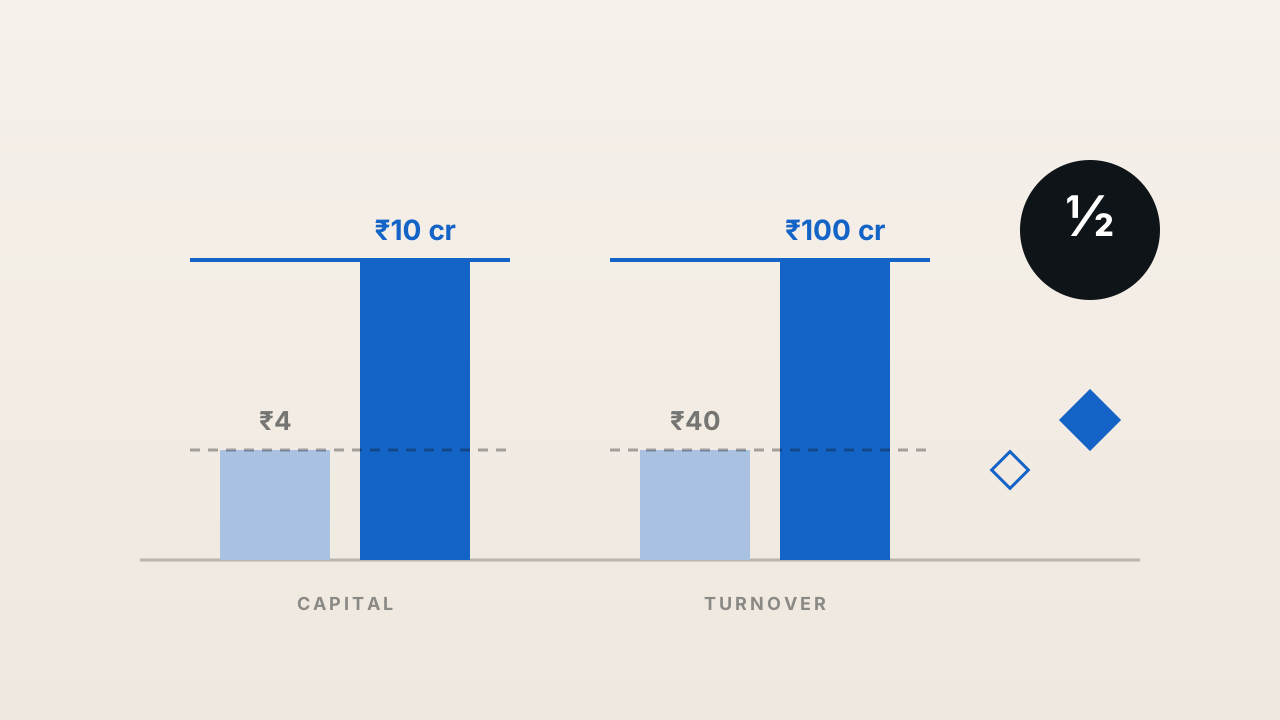
The Companies Act, 2013 has always given "small companies" a lighter regime. What changed is who qualifies. On 1 December 2025, the Ministry of Corporate Affairs raised the limits from ₹4 crore paid-up capital and ₹40 crore turnover to ₹10 crore and ₹100 crore, with immediate effect.
For nearly every startup and owner-run private company in India, that means one thing: you are almost certainly a small company. The question is whether your compliance reflects it.
Do you qualify?
A company is a small company if all of these are true:
- It is a private company, not a public company.
- Its paid-up share capital is ₹10 crore or less. (Paid-up, not authorised, capital.)
- Its turnover in the profit and loss account of the immediately preceding financial year is ₹100 crore or less.
- It is not a holding company or a subsidiary, a Section 8 (non-profit) company, or a company governed by a special Act.
Both money tests must be met at the same time. The subsidiary exclusion catches many founders: if your company is owned by another company, or owns one, the relief does not apply, however small the numbers.
| Limit | Before 1 Dec 2025 | From 1 Dec 2025 |
|---|---|---|
| Paid-up capital | ₹4 crore | ₹10 crore |
| Turnover (preceding year) | ₹40 crore | ₹100 crore |
The eight things a small company does not have to do
| Area | A regular private company | A small company |
|---|---|---|
| Board meetings | At least 4 a year, no more than 120 days apart | 1 in each half of the calendar year, at least 90 days apart |
| Cash flow statement | Part of the financial statements | Not required |
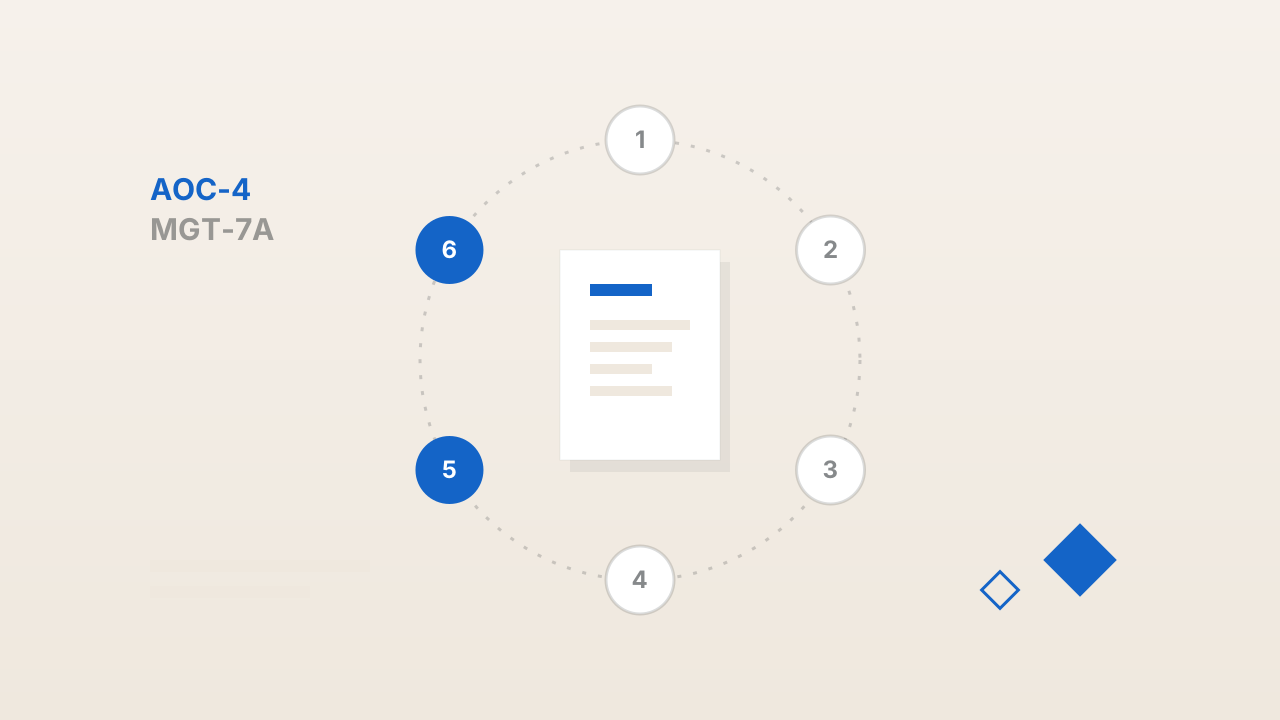
| Annual return | Form MGT-7, with certification by a practising company secretary above certain limits | Form MGT-7A, an abridged return that a director can sign |
| Board's report | Full format | Abridged format |
| CARO 2020 reporting by auditor | Applies | Does not apply |
| Auditor reporting on internal financial controls | Applies | Does not apply |
| Auditor rotation | Mandatory after the prescribed tenure | Not required |
| Penalties | Full amount | Half, capped at ₹2 lakh for the company and ₹1 lakh for an officer in default |
One thing does not change: the statutory audit itself is still mandatory for every company, whatever its size. What shrinks is the auditor's reporting load, which should show up in the audit fee.
What this is worth in practice
- Two board meetings, not four. That is two fewer sets of notices, minutes and director calendars every year. It does not stop you meeting more often; it stops you being penalised for not doing so. (A new company's first board meeting is still due within 30 days of incorporation.)
- A lighter audit. Without CARO and internal financial controls reporting, the auditor has less to test. If your audit fee did not change when you became a small company, ask why.
- A simpler annual return. MGT-7A carries fewer disclosures and can be signed by a director.
- Smaller fines when something slips. Under Section 446B, penalties for a small company are half the normal amount, within the caps above. That applies to late filing too, which matters because late fees on ROC forms add up daily.
Three mistakes we see
- Filing as a regular company out of habit. An accountant who has always filed MGT-7 may keep doing so. Check which form your last annual return used; our ROC annual filing guide lists every form and date.
- Forgetting to re-test every year. Status depends on the previous year's turnover and current paid-up capital. A fundraise that lifts paid-up capital above ₹10 crore, or a strong year above ₹100 crore of turnover, ends it.
- Creating a subsidiary casually. Setting up a second company under your first, for a new product or a new state, makes both a holding and a subsidiary. Both lose small company status. Consider sibling companies owned by the founders instead, and take advice first; our structure comparison is a good starting point.
What is coming next
The Act itself sets an outer ceiling for these limits, and the December 2025 rule used all of it. The Corporate Laws (Amendment) Bill, 2026, introduced in the Lok Sabha and referred to a Joint Parliamentary Committee, would raise that ceiling to ₹20 crore of paid-up capital and ₹200 crore of turnover. Even if it passes, the actual limits would apply only once the Ministry prescribes them by rule. We will update this article when that happens.
The honest summary
Small company status is not an application or a certificate. It is a set of relaxations that apply automatically when the numbers fit, and are easy to leave unused. Check your paid-up capital, last year's turnover and your group structure. If all three fit, make sure your board calendar, annual return and audit scope do too.
Rasika's Annual ROC Compliance service files MGT-7A, AOC-4 and your board calendar at a fixed fee, and tells you when your status changes.
Frequently asked questions
What is a small company in India in 2026? +
Do I need to apply to be a small company? +
Does a small company need an audit? +
How many board meetings must a small company hold? +
Can a subsidiary be a small company? +
Sources (checked 1 October 2026)
- LiveLaw: MCA redefines small company criteria (1 December 2025 notification)
- Lexology: MCA notifies revised small company thresholds (definition, exclusions, statutory ceiling)
- Verist Law: small company exemptions (board meetings, MGT-7A signing, auditor rotation, 446B)
- DPNC: relaxation for small companies (IFC reporting, CARO, penalty caps)
- Patron Accounting: small company audit exemption (audit remains mandatory)
- IndiaCorpLaw: the small company threshold and delegated legislation (Corporate Laws (Amendment) Bill, 2026)
- AZB & Partners: Corporate Laws (Amendment) Bill, 2026 (₹20 crore and ₹200 crore proposal, JPC referral)
This article is general information, current as of 3 October 2026. It is not legal or tax advice for your specific situation.