The Labour Codes for a five-person team: what changed on 21 November 2025
Most coverage of the Labour Codes is written for HR departments of 5,000 people. This is the version for a founder with three to twenty employees: the six things that changed for you, and the salary-slip test that tells you whether you are already out of line.
On 21 November 2025, India brought four Labour Codes into force: the Code on Wages, 2019; the Industrial Relations Code, 2020; the Code on Social Security, 2020; and the Occupational Safety, Health and Working Conditions Code, 2020. Together they replaced 29 central labour laws, many written between the 1930s and 1950s.
If you employ even one person, at least three of the changes below apply to you today.
1. Every worker gets a written appointment letter
Before the Codes, many small businesses hired on a phone call and a WhatsApp message. That is no longer compliant. A written appointment letter is now mandatory for every worker, including fixed-term, contract and gig roles.
The government's own summary says the letter should state designation, wages and social security entitlements. In practice, a good small-business letter covers:
- Role, reporting line and place of work
- Wages, split into basic, allowances and any variable pay
- Working hours and weekly off
- PF, ESI and gratuity entitlements, where they apply
- Notice period and how employment ends
- Confidentiality and IP ownership (a proper NDA or IP clause, not a pasted template)
The letter is also your protection. When an early exit becomes a dispute, a letter with clear terms is what your side of the story rests on.
2. The 50% wage rule: the salary-slip test
This is the change most likely to cost you money, and the one founders most often miss.
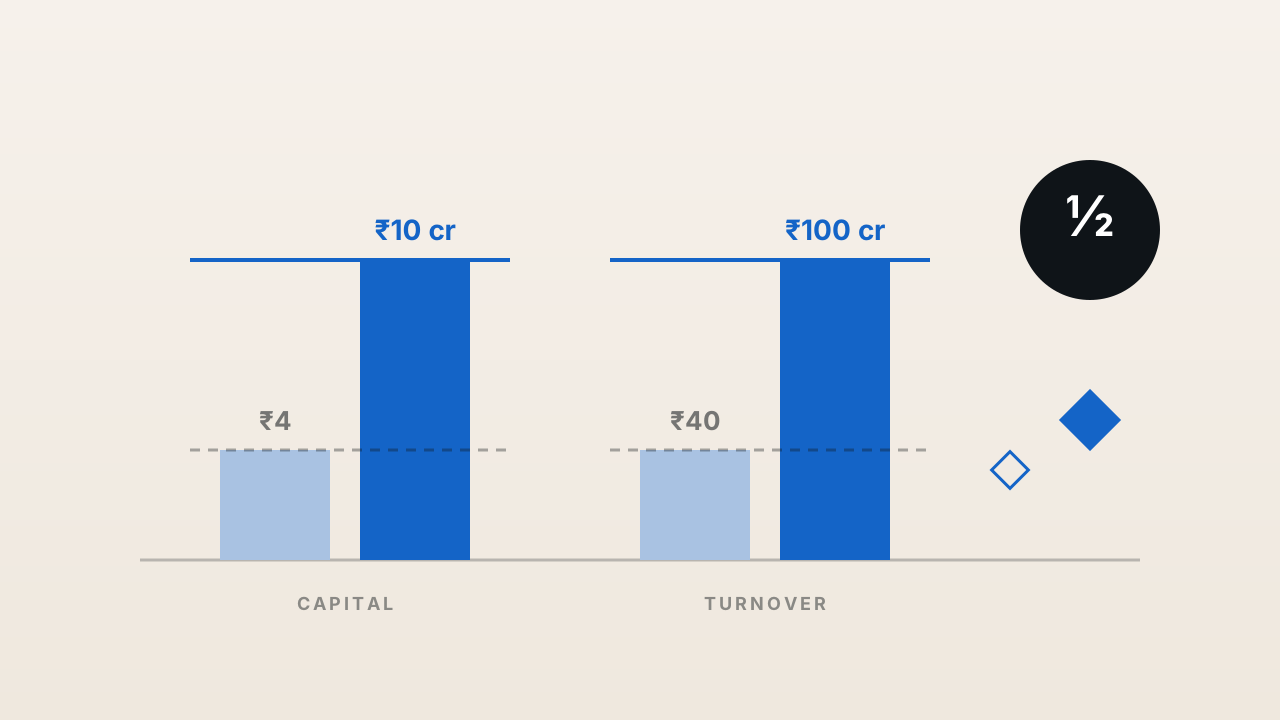
The Codes create one definition of "wages" used across all four laws. Certain components are excluded from it, such as HRA, conveyance allowance, statutory bonus, overtime and your PF contribution. The catch: if those excluded components add up to more than 50% of total remuneration, the excess is treated as wages anyway.
The test: take any employee's monthly salary slip. If basic pay (plus dearness allowance, if any) is below half of the total, your structure needs attention.
| Example monthly pay | Before (typical startup structure) | After (compliant structure) |
|---|---|---|
| Basic | ₹15,000 (30%) | ₹25,000 (50%) |
| HRA and allowances | ₹35,000 (70%) | ₹25,000 (50%) |
| Total | ₹50,000 | ₹50,000 |
Why it matters: PF, gratuity and leave encashment are calculated on wages, and salary TDS now runs under the Income-tax Act, 2025. A bigger wage base means higher employer contributions, and possibly a slightly lower take-home salary for the employee. Practitioners expect payroll cost increases of roughly 8% to 15% for companies that kept basic pay low. Model it before your next appraisal cycle, not after an inspector asks.
3. Salary by the 7th, and settlement within two working days
Timely payment of wages now applies to all employees, not only those below a salary ceiling. The government's summary for IT and ITES workers states it plainly: salary must be released by the 7th of every month.
Exits have a clock too. When an employee resigns, is removed or is retrenched, the Code on Wages requires wages due to be paid within two working days. A "full and final in 45 days" line in your HR policy should be rewritten.
4. Fixed-term employees get gratuity after one year
Fixed-term employees must now receive the same benefits as permanent staff, including leave, medical and social security, and equal wages for the same work. They become eligible for gratuity after one year of continuous service instead of five.
If you hire for projects on 11-month contracts to stay "flexible", that approach no longer saves the cost it used to. Price it into project quotes.
5. Leave, overtime and health check-ups
- Annual leave: workers can avail annual leave after 180 days of work in a year.
- Overtime: work beyond prescribed hours must be consent-based and paid at least double the normal rate.
- Health check-ups: employers must provide a free annual health check-up to workers above 40.
- Women at night: women may work night shifts in all establishments, with consent and required safety measures such as safe transport.
6. Social security reaches further, and filing gets simpler
ESIC now extends across India. It is voluntary for establishments with fewer than 10 employees, and mandatory with even one employee in a hazardous process. Gig and platform workers now have a defined place in the social security system, funded partly by aggregators.
The good news for small employers is on paperwork: the Codes move towards a single registration, a single PAN-India licence and a single return, replacing overlapping filings under separate laws. Inspectors are also re-designated as inspector-cum-facilitators, meant to guide compliance rather than only penalise.
What has not settled yet
The Codes are central law; states write many of the operating rules on minimum wages, working hours, registers and registration. During the transition, the relevant provisions of the old Acts and their rules continue in force. For a Pune business, that means watching Maharashtra's notifications, not only Delhi's. Our guide to Pune and Maharashtra registrations covers the state layer.
Your 10-day checklist
- List everyone who works for you: employees, fixed-term staff, contractors, interns, freelancers.
- Issue or reissue appointment letters to every employee and fixed-term worker.
- Run the salary-slip test on every salary and model the PF and gratuity impact of restructuring.
- Move payroll to be paid by the 7th, every month.
- Rewrite your exit policy for settlement within two working days.
- Add gratuity to the cost of any fixed-term contract longer than a year.
- Record overtime consent in writing and pay it at double rate.
- Book annual health check-ups for employees above 40.
- Check ESIC and PF applicability for your headcount.
- Put a named person in charge of tracking Maharashtra's rules.
The honest summary
The Codes are more worker-friendly and, on paper, simpler to comply with. For a small team, the cost is real but predictable: a heavier basic salary, faster exits and written terms for everyone. The expensive version is discovering all of this during a dispute.
Rasika's Legal Documentation service drafts Code-compliant appointment letters, an exit policy and a compensation structure template for your team.
Frequently asked questions
When did the new Labour Codes come into force? +
Is an appointment letter mandatory for a small business? +
What is the 50% wage rule? +
When is a fixed-term employee eligible for gratuity? +
By when must salary be paid? +
Sources (checked 1 October 2026)
- PIB via Ministry of Labour: implementation of four Labour Codes, 21 Nov 2025 (appointment letters, FTE gratuity, salary by the 7th, 180-day leave, double overtime, ESIC, health check-ups, transition rule)
- AZB & Partners: overview of the Labour Codes (wage definition and 50% deeming)
- The People's Board: offer letter requirements (8% to 15% payroll cost estimate; letters for all worker types)
- ClearTax: New Labour Codes 2025 (state rules, preparation roadmap)
This article is general information, current as of 3 October 2026. It is not legal or tax advice for your specific situation.